This article first appeared on Roborant Review on Aug 31, 2026
By Tamsin Spencer Smith
Bay Area Artist Kate Haug’s takeover of the Sebastopol Center of the Arts immerses viewers in a layered contemplation of popular culture by resurfacing historic moments and forgotten icons from the last American century. Collaborative Practices presents a march through high points of social activism, the downsides of technological progress, and complexities of womanhood and mother-daughter relationships.
The exhibition unfolds as a series of installations that chronicle the arc of Haug’s career as a conceptual artist. History, news, and physical objects that hold personal and collective memory form the throughline of her work. This is not a rarefied gallery show. Haug has taken and continues to take her art to the streets and even the skies.
On November 6, 2024, Haug hired a plane to fly a trailing banner that read “We Hold Democracy Together” down the Hudson River and around Ellis Island. In an age in which Americans access news through increasingly narrow information pipelines, Haug turned to an old-school marketing method to literally and figuratively rise above the digital chatter with a message to the masses.
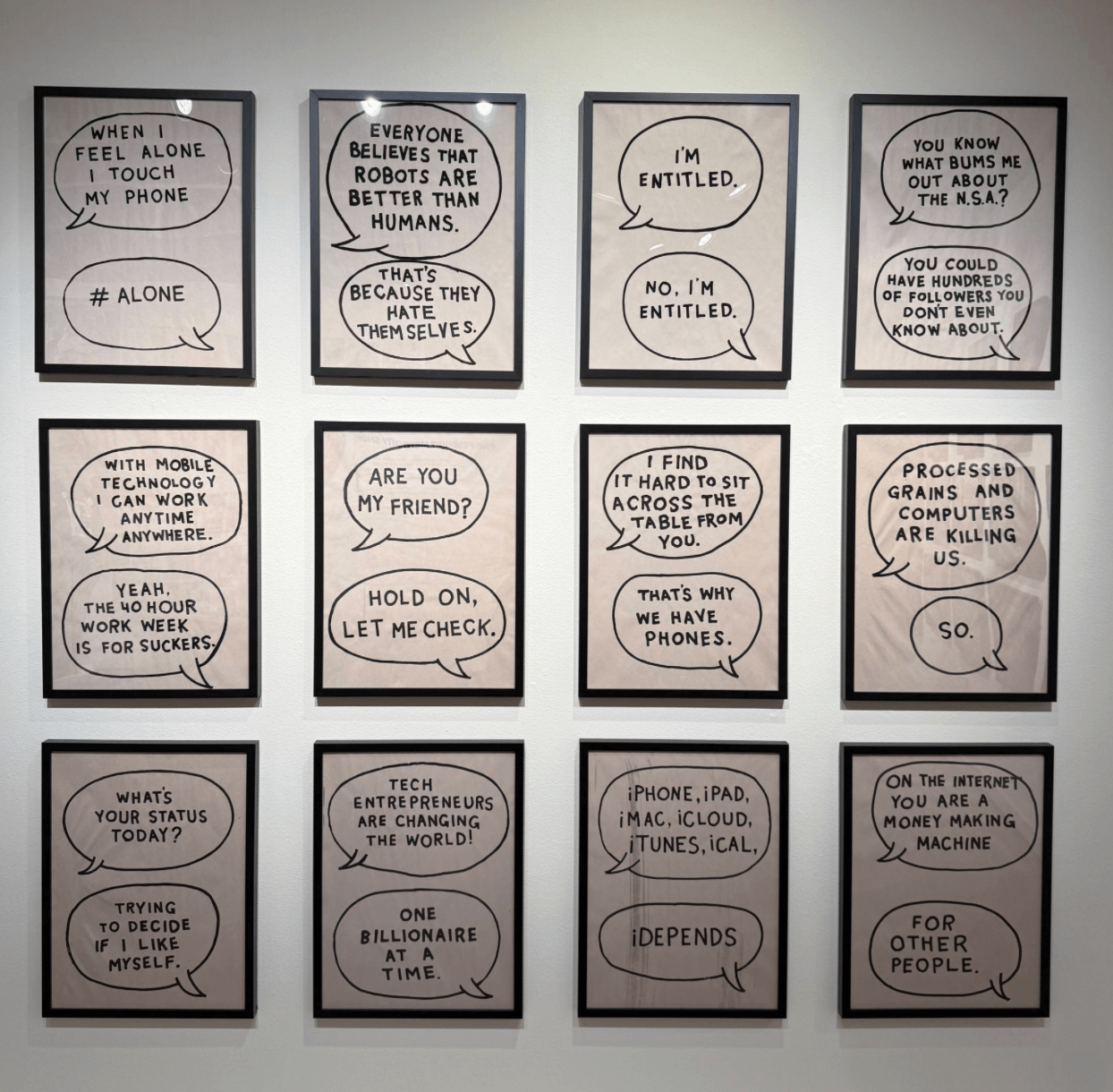
“Public Post” forms another of the artist’s efforts to punch through political and commercial noise.
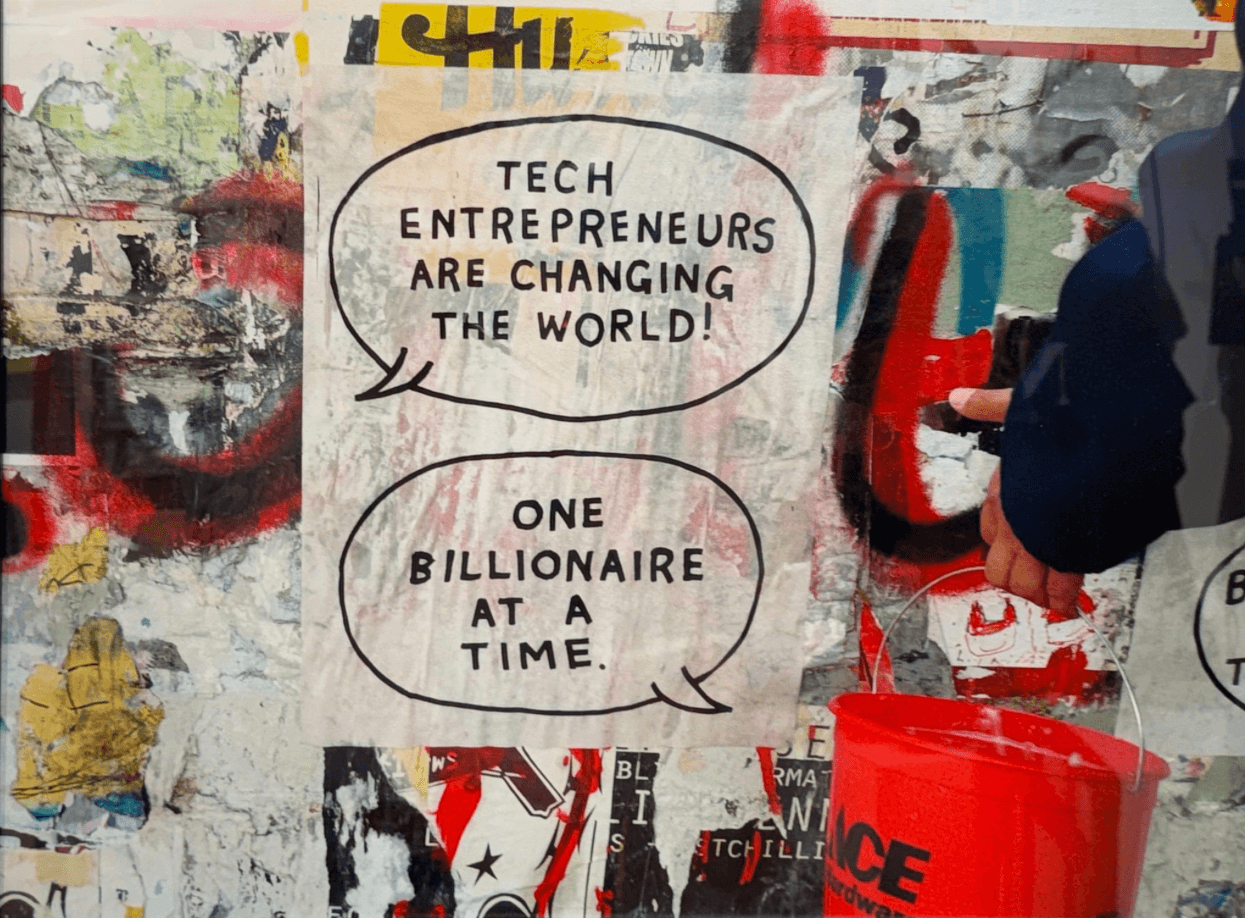
It’s a collaboration from 2004, in which Haug and artists Veva Edelson and Ivan Uranga covered Valencia Street in San Francisco with wheatpaste posters. Fully of playful but cutting commentary around the impact of technology on social cohesion, Haug effectively reclaims the “public” aspect of public space to circumvent the cultural disaggregation of the internet.
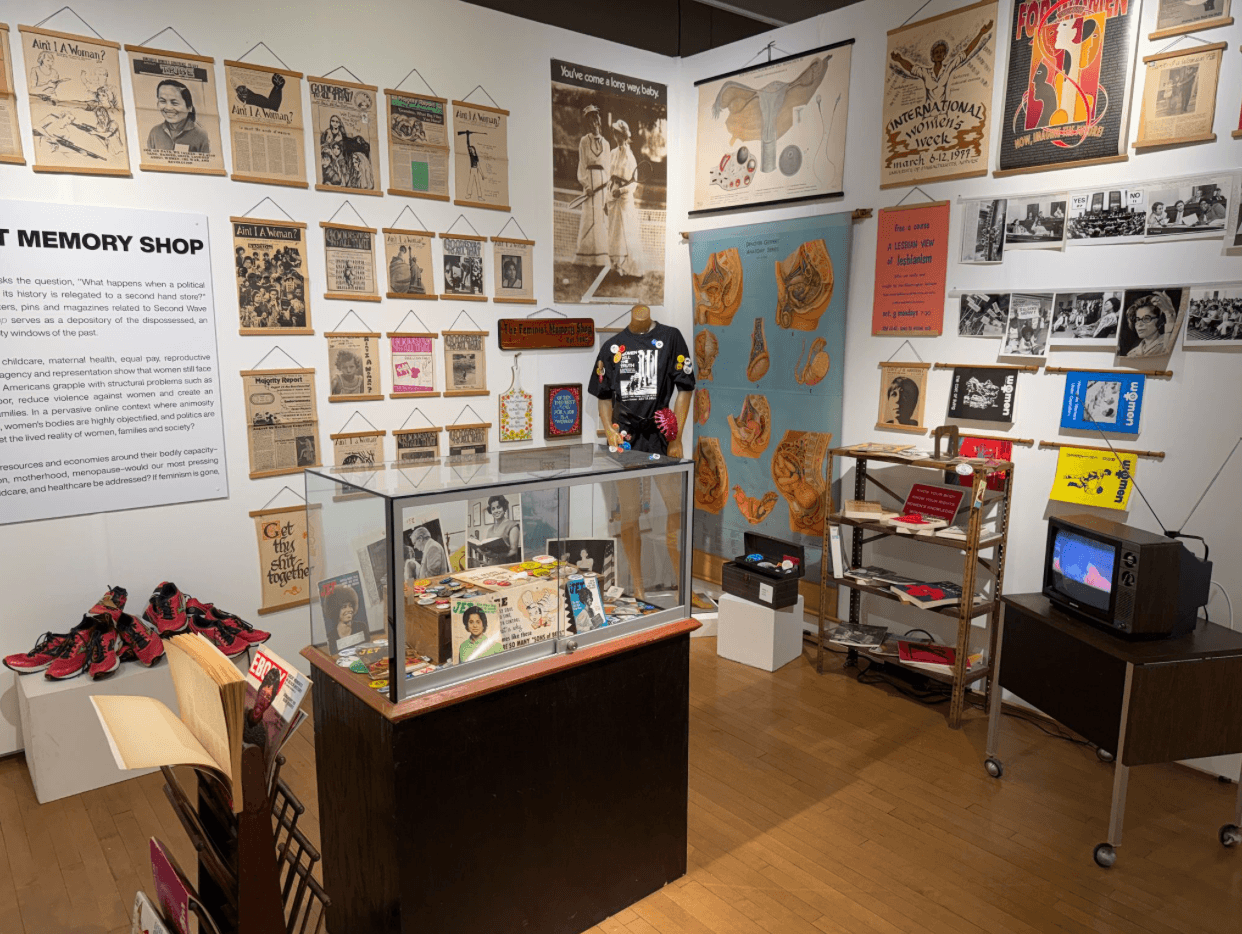
In an installation titled “The Feminist Memory Shop,” Haug creates a thrift shop that looks like just the sort of defunct enterprise that gentrification would have pushed out of the Mission District before the first dot-com bubble burst. To stock her imaginary marketplace of ideas, Haug scoured eBay for genuine relics that remain powerful emblems of resistance and faith that the governing system could be transformed. Though largely discarded to the dustbin of history, this collection of cast-off ephemera have a haunting, tallismanic effect.
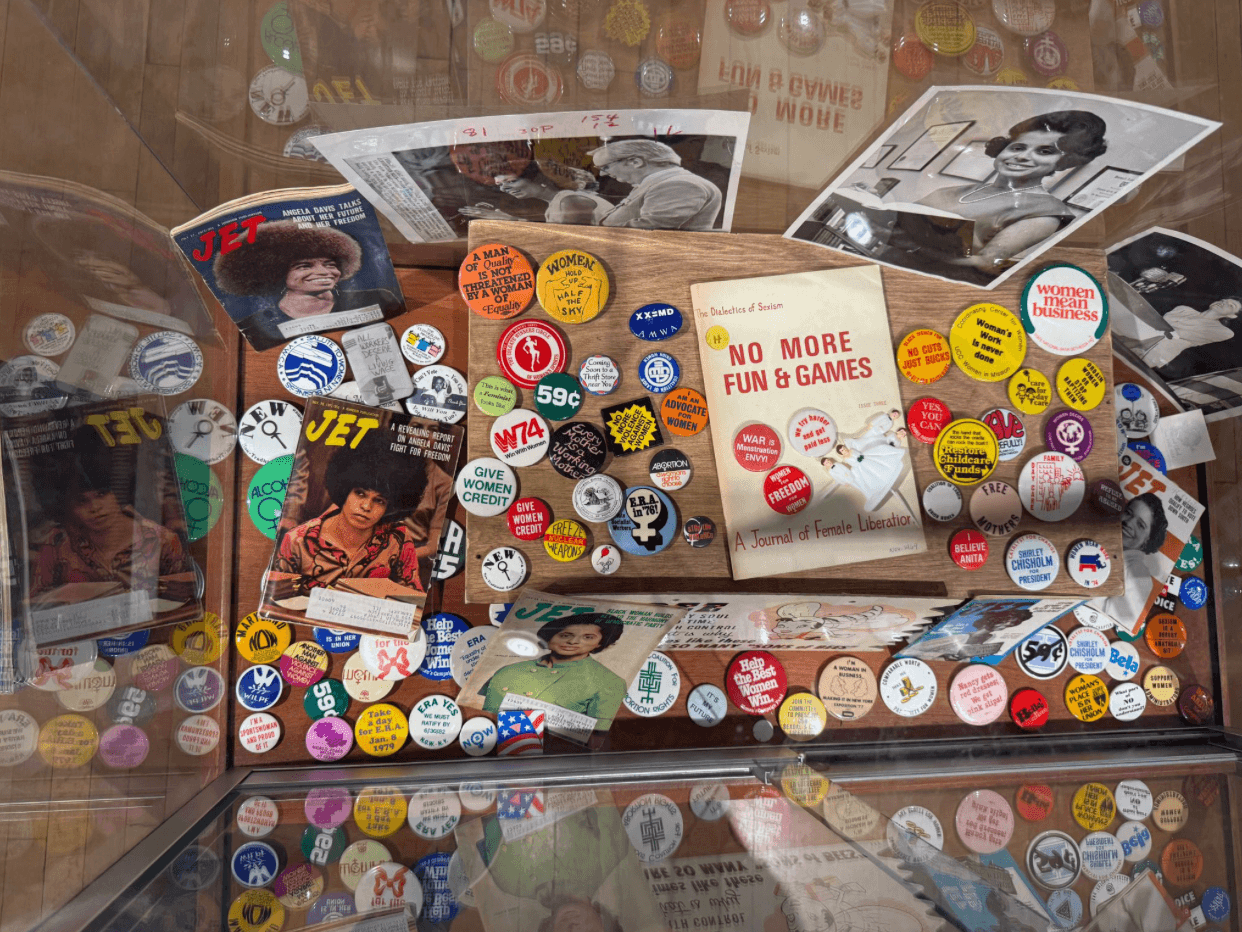
Community-authored zines from across the country are displayed with pins, posters, and newspapers covering the efforts of Second Wave feminists to secure advances in maternal health, affordable childcare, equal pay, reproductive autonomy, and freedom from violence. What is the value of these physical reminders if they have no strict retail value? Does the human blood, sweat, and tears that they emblematize no longer hold relevance?
In a corner of the shop, emanating from an old boxy TV set, we hear the eloquent voice of Barbara Jordan speaking on the rule of law at the impeachment proceedings against Richard Nixon. Jordan was the first woman descendant of American slavery elected to the U.S. House of Representatives. She was from Texas, a former Confederate state. Her words: “My faith in the Constitution is whole, it is complete, it is total” evoke a sensation more precinct than nostalgic.
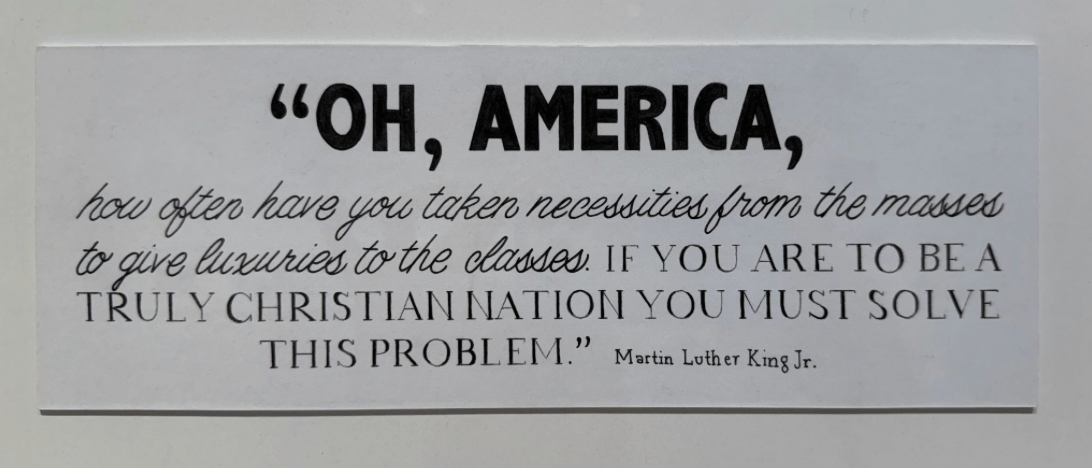
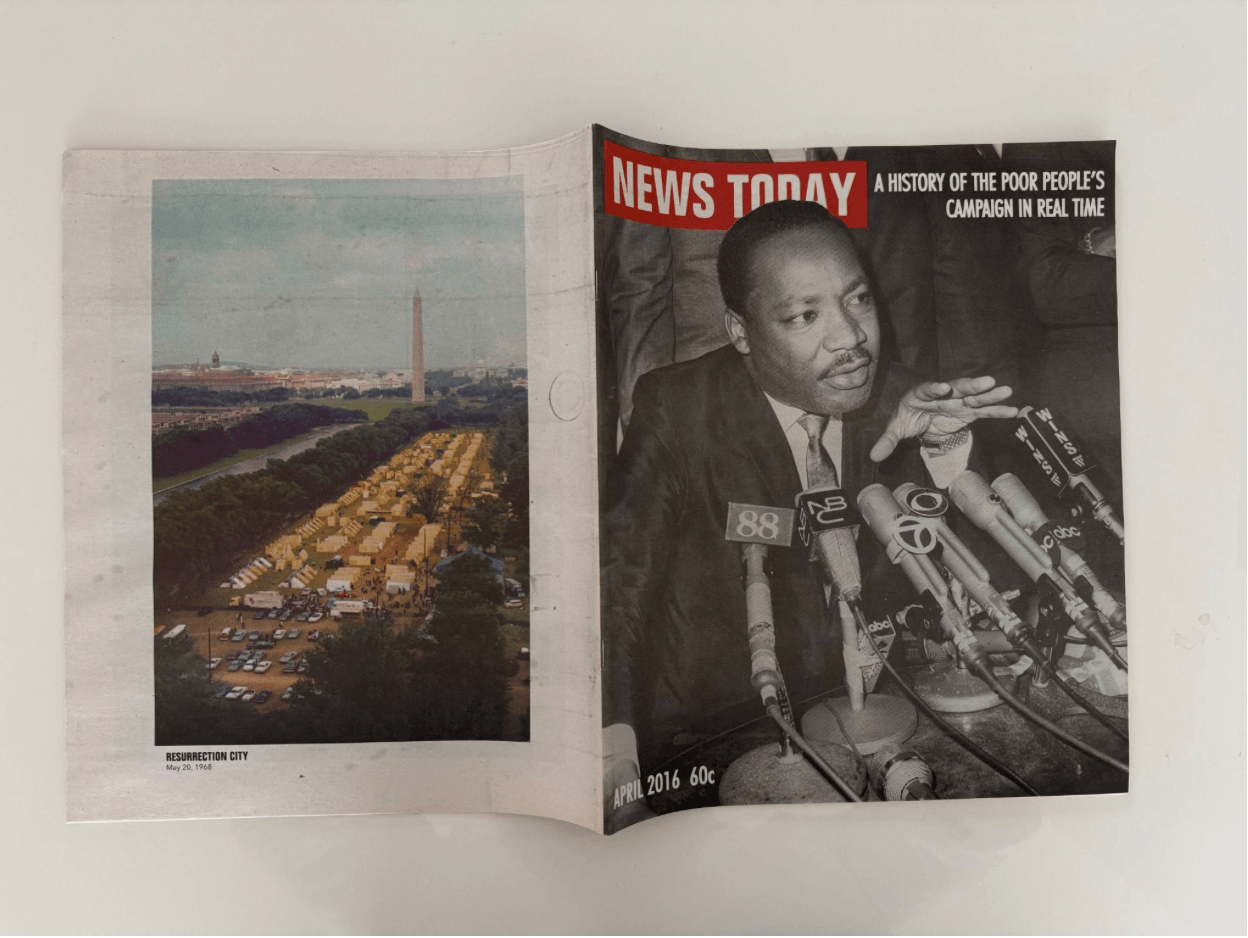
William Faulkner’s famous quote echoes throughout this show: “The past is never dead. It’s not even past.” This resonance is particularly painful in the installation “News Today: A History of the Poor People’s Campaign in Real Time.” Haug presents archival AP photos interspersed with commentary from activists, reporters, and other individuals involved in Martin Luther King’s final and largely forgotten protest campaign. A key aspect of this call for economic parity was the erection of a Resurrection City encampment on the National Mall. After King’s assassination, it became the nexus point of a huge protest against economic inequality that lasted 420 days.
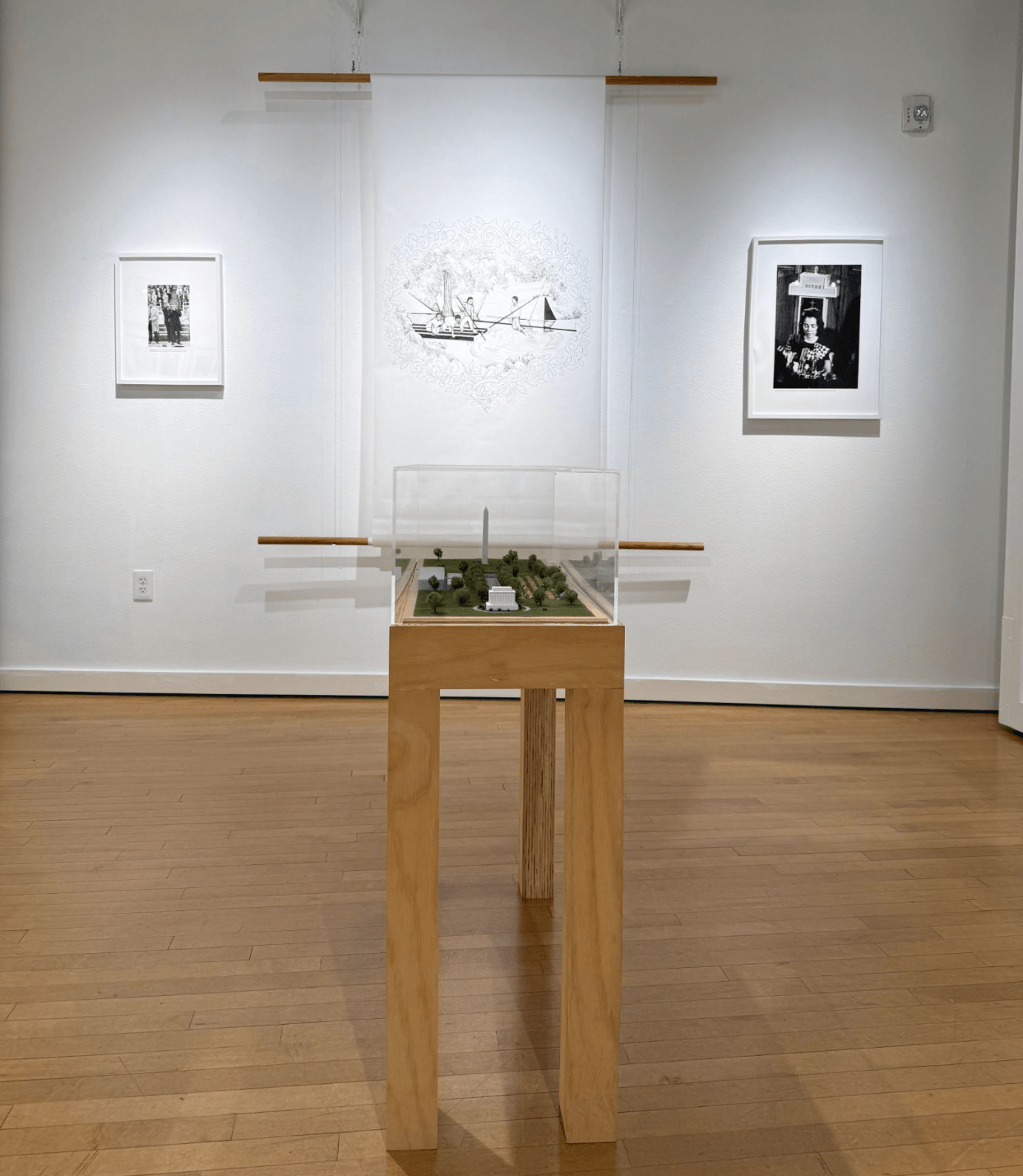
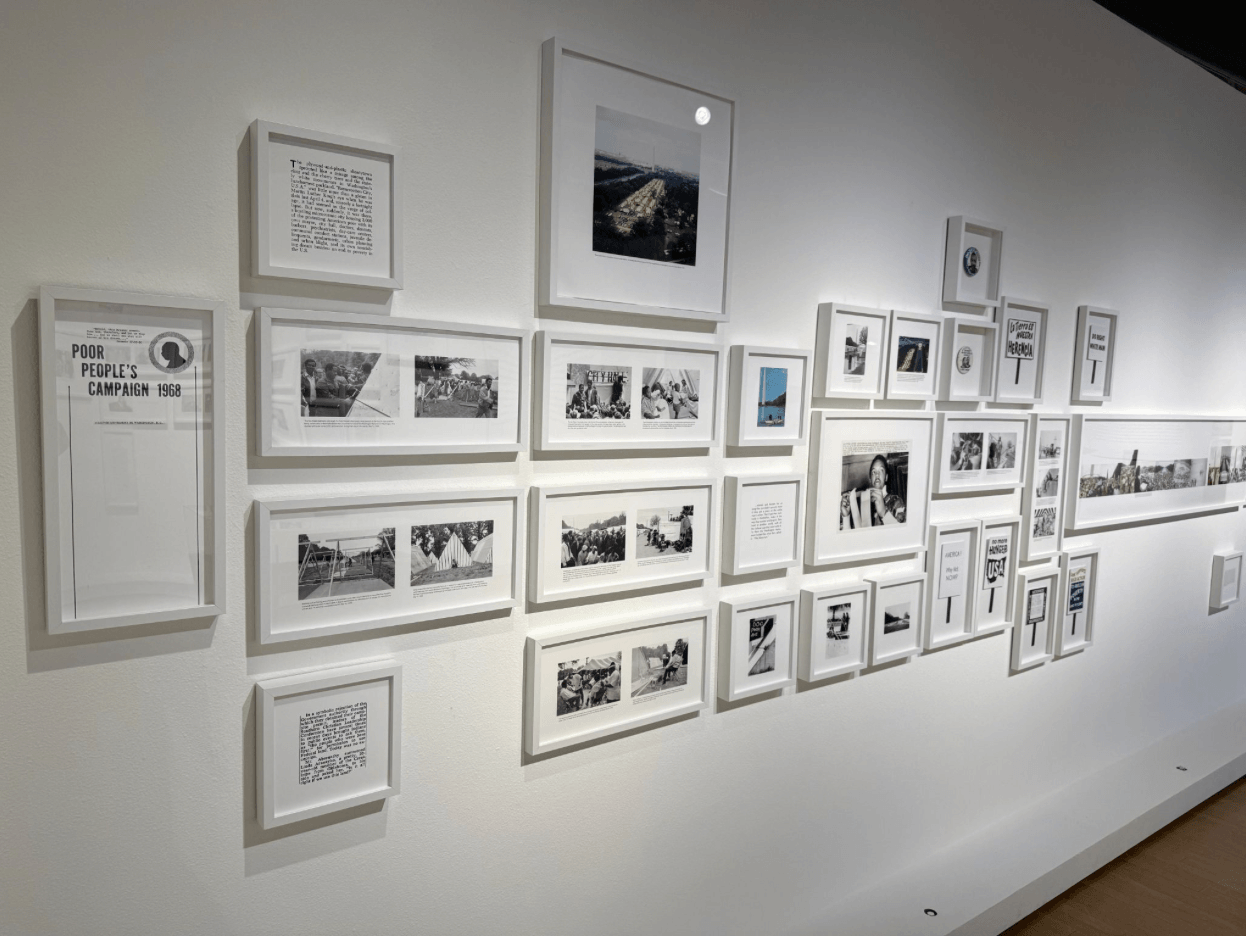
It’s all too easy to attend an exhibition, read the walls, and step away as if the story was someone else’s. But Haug and her collaborators produced a take-home newsprint catalogue detailing all the work from the original 2016 installation. It has the look and feel of a vintage Life magazine and is hard to hold in one’s hands and not feel proximate to and responsible for the ongoing failure to achieve economic justice. Particularly for one living in the Bay Area, it’s impossible not to feel that things are only getting worse.
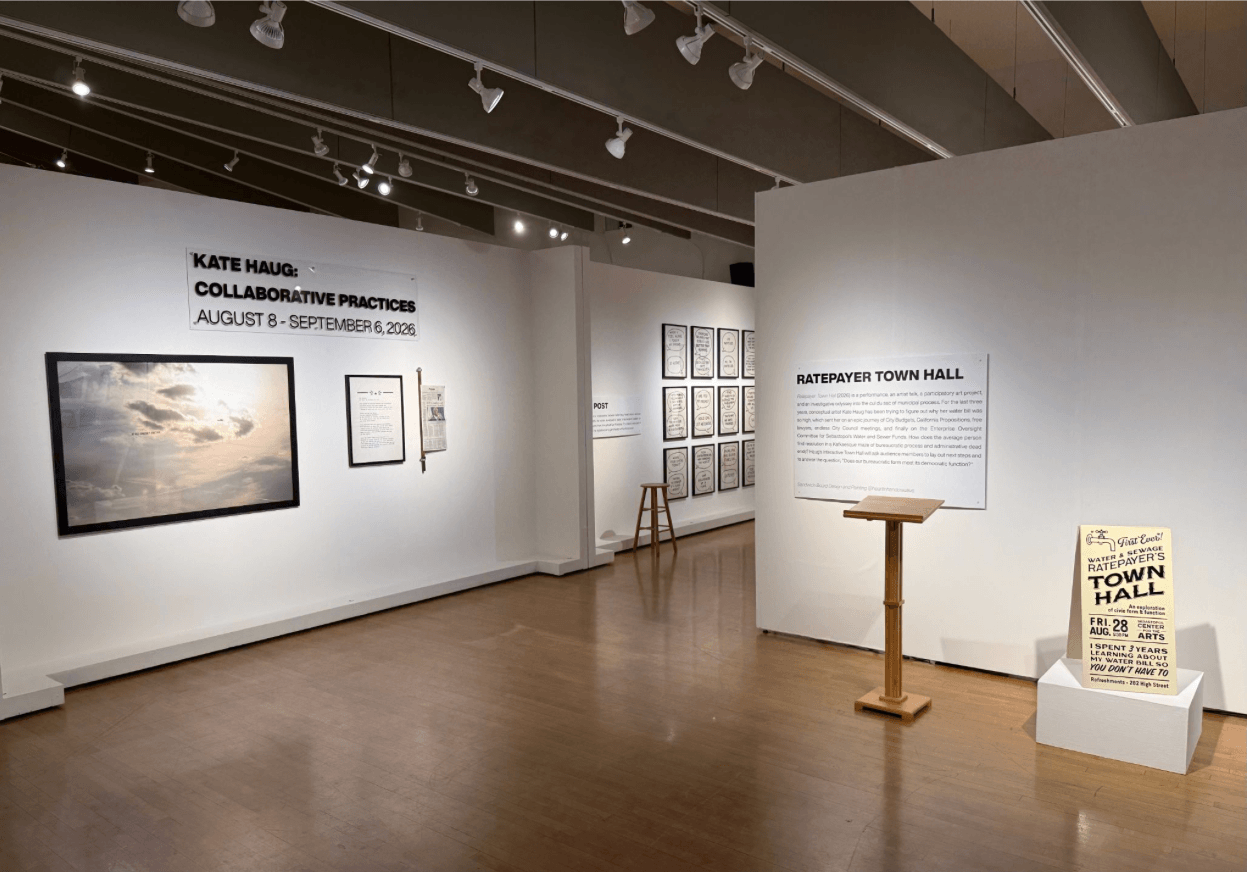
Haug’s effort to make history today’s news is far from disempowering, however. She is known locally in West County Sonoma as an active and effective voice on local issues. Public programming for the exhibition extends beyond the gallery walls with a performance piece entitled “Water & Sewer Ratepayer’s Town Hall.” On August 28, Haug will chronicle her efforts to understand why her water bill suddenly spiked. That three-year effort led to a civil grand jury investigation, which found the city of Sebastopol should reform its long-range planning process, repay improperly allocated funds, and employ stronger financial oversight.
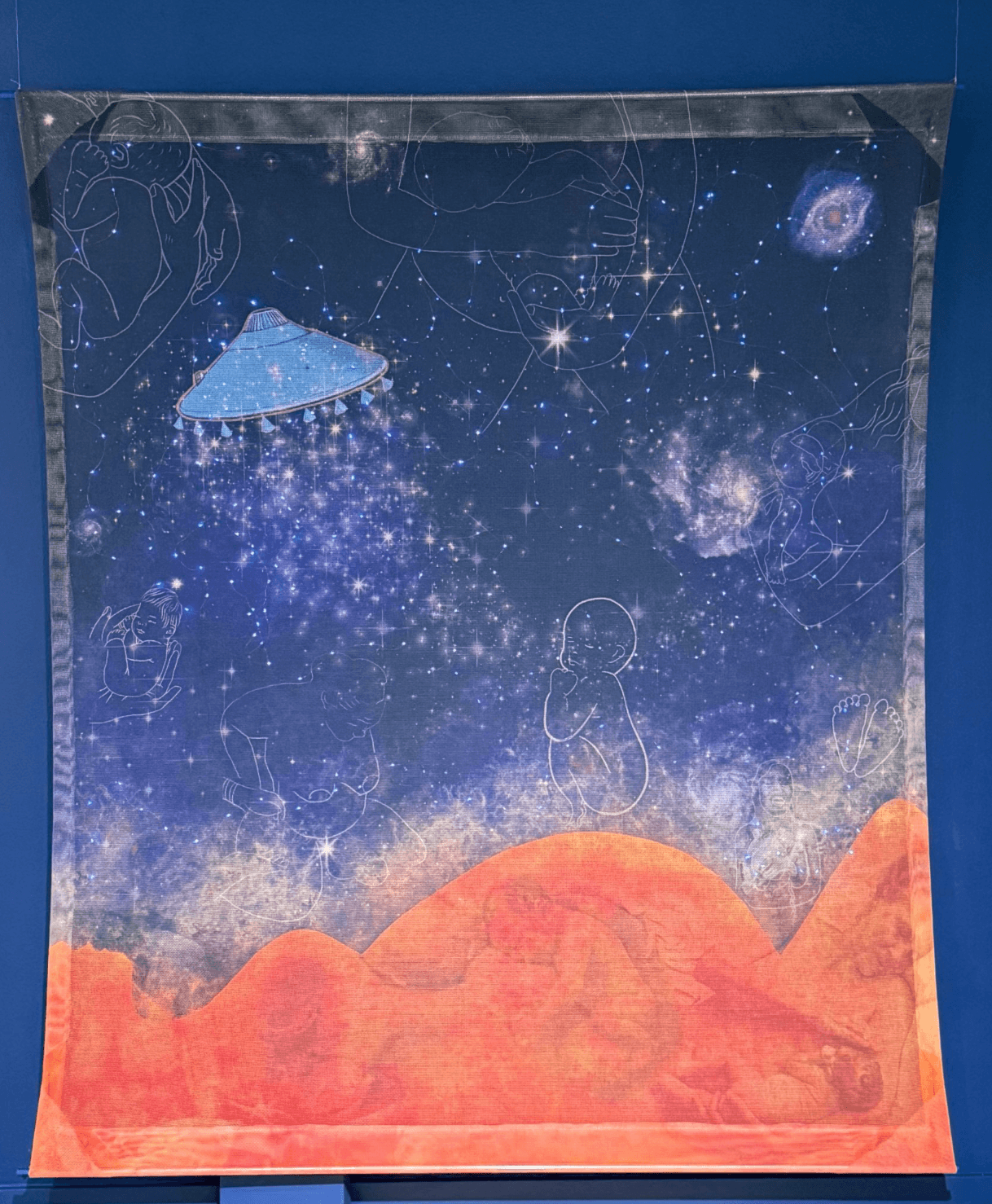
This is one of several aspects of the show in which personal and collective history are interwoven. Haug’s newest work “Mothership” is indicative of her ongoing interest in co-creation. A community drawing event, zine workshop, clothing swap, and motherhood mandala drawing studio all form parts of the “Mothership”. It also includes a piece made in collaboration with mother-daughter artists Yoko OK and Helen Oji.
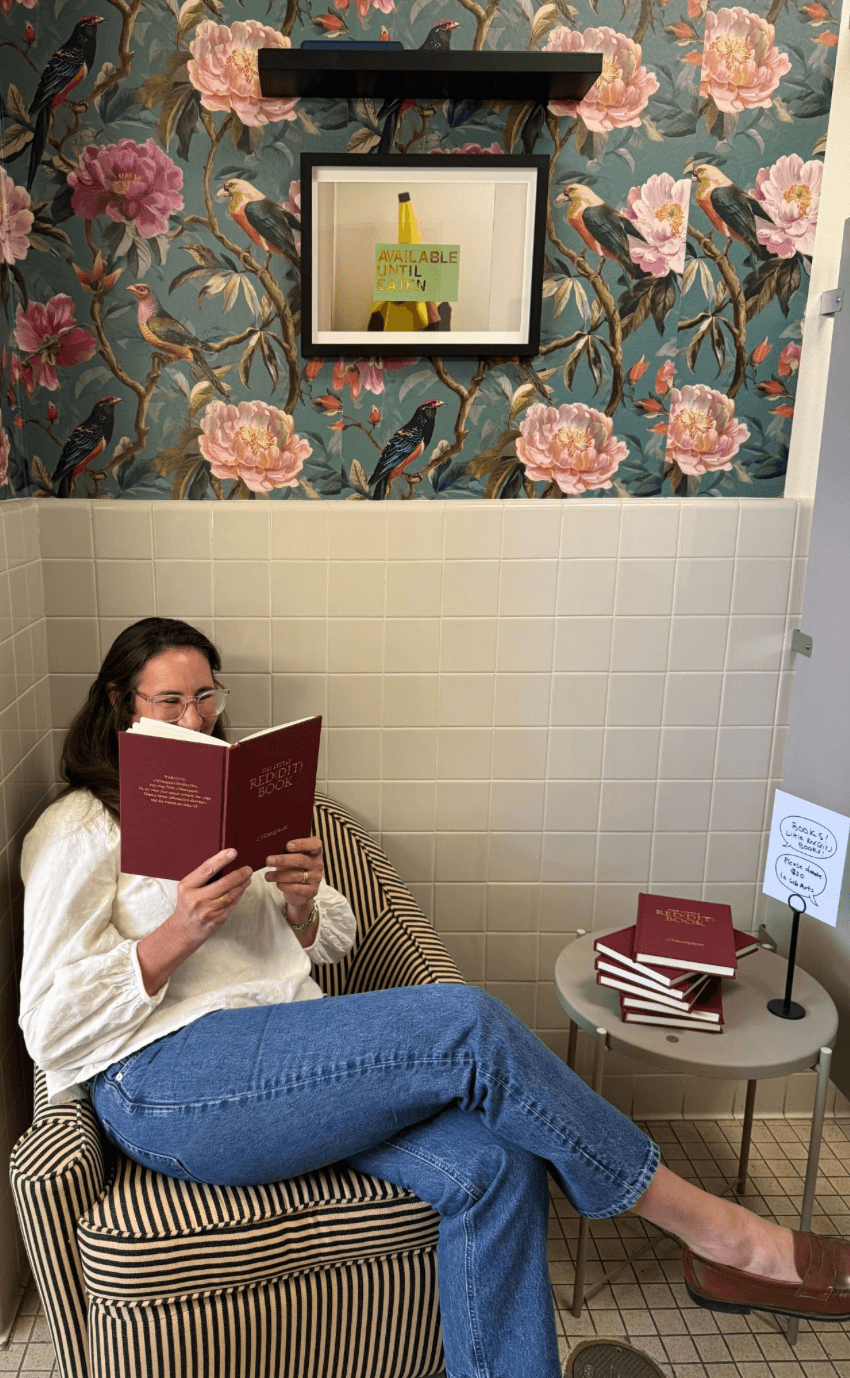
Haug has a gift for making issues of broad civic import and the most intimate moments of an individual’s life into opportunities for consideration and action. A final, unexpected installation greets visitors to the women’s bathroom at SebArts. It’s a reading nook adjacent to the stalls. From a loud speaker over the nook’s chair float the voices of women reading snippets from a variety of sources. On a small side table sit hardbound copies of “THE LITTLE RED(DIT) BOOK,” a compilation of quotes collected from the 2025 Reddit thread r/Menopause. Some of the entries are hilarious, others sobering in their truths about gender bias in medical education, research, and training.
Through this provocative exhibition, Haug leads with a sense that none of us is alone and that now is hardly the time to abandon all hope. Hers is a mission of shared purpose. It’s all there in the title of the show, Collaborative Practices. We need each other to nurture civic life. The struggles of the past are not the property of those who came before us. They are signposts of where we are heading. We trash them at our peril.
Through this provocative exhibition, Haug leads with a sense that none of us is alone and that now is hardly the time to abandon all hope. Hers is a mission of shared purpose. It’s all there in the title of the show, Collaborative Practices. We need each other to nurture civic life. The struggles of the past are not the property of those who came before us. They are signposts of where we are heading. We trash them at our peril.